

Why Rubber Seals Fail: Common Problems We See in Export Orders

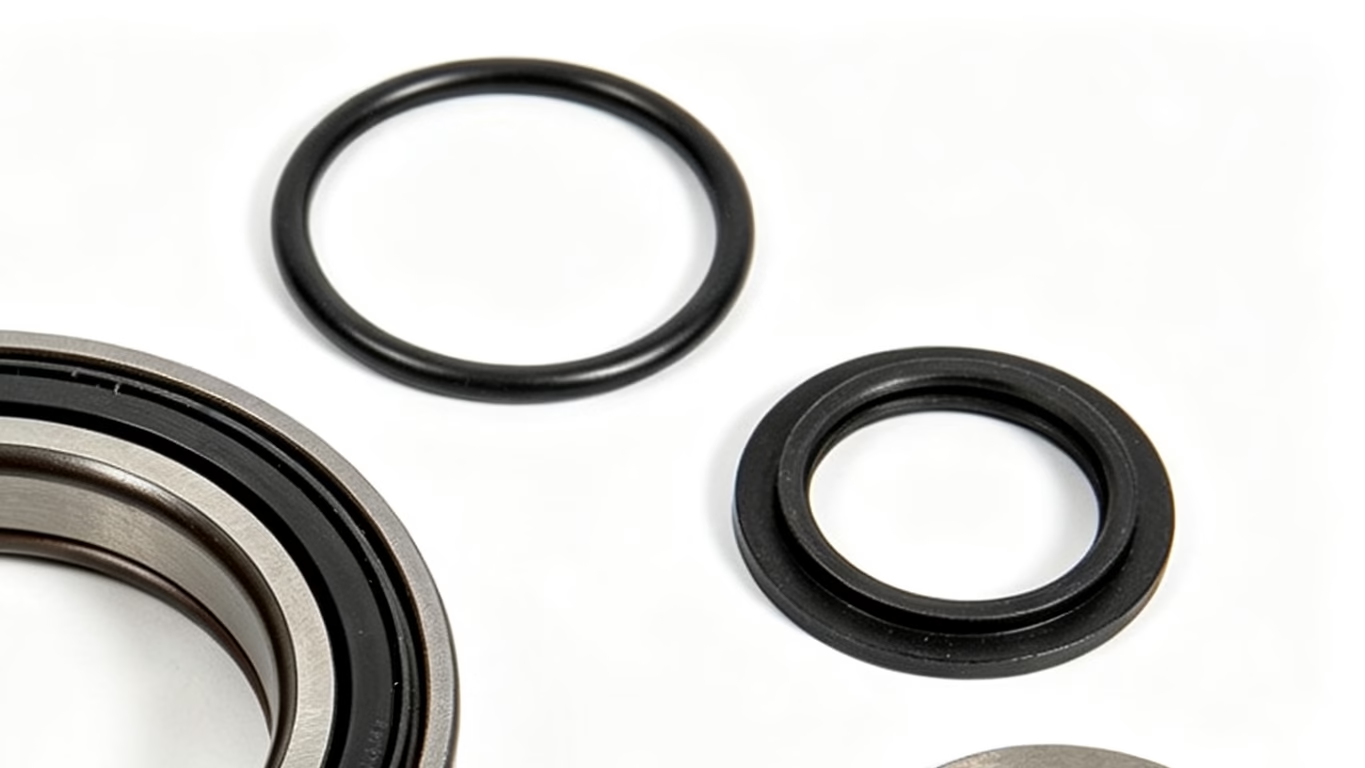
Rubber seals are small components, but when they fail, the consequences can be serious.
In many cases, customers come back not because of product defects, but because something in the selection or application went wrong.
After handling different export orders, we’ve noticed that most seal failures follow similar patterns.
1. Wrong Material Selection
This is by far the most common issue.
Many buyers focus on size and hardness, but ignore the working environment.
For example:
- Using NBR in high-temperature environments
- Using EPDM in oil systems
- Choosing standard rubber for chemical exposure
These mistakes don’t show immediately, but after some time, the seal starts to crack, swell, or lose elasticity.
In many cases, simply switching material can solve the problem.
2. Temperature Misjudgment
Temperature range is often underestimated.
A seal may work fine at room temperature, but once the machine runs continuously, internal heat builds up.
We’ve seen seals fail not because they were poor quality, but because the actual working temperature was higher than expected.
This is especially common in:
- Automotive engines
- Industrial pumps
- Hydraulic systems
3. Installation Issues
Sometimes the product itself is fine, but installation causes damage.
Common problems include:
- Overstretching O-rings
- Improper groove design
- Surface scratches during installation
These issues can shorten the lifespan significantly.
4. Inconsistent Supply Quality
Another issue in long-term projects is inconsistency.
Even if the first batch works well, later batches may vary if the supplier changes raw materials or production conditions.
That’s why stable supply matters more than one-time quality.
A Practical Approach
From our experience, the best way to avoid seal failure is:
- Confirm working environment (temperature, pressure, media)
- Select material accordingly
- Keep supplier consistent
- Test small batches before scaling
Rubber parts may look simple, but they are highly application-dependent.
In most cases, failure is not about manufacturing—it’s about mismatch.