

Custom Rubber Parts Manufacturing: What Buyers Should Know

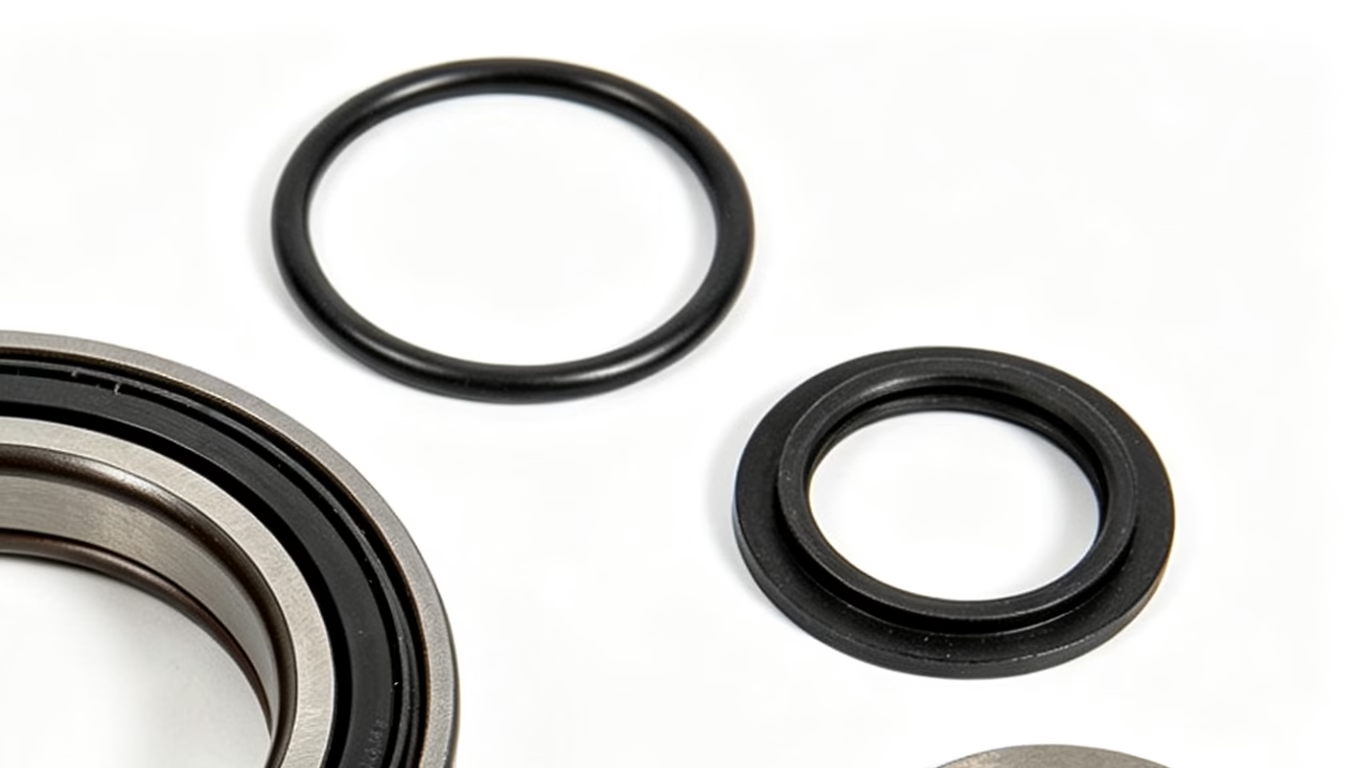
For many overseas buyers, sourcing rubber products from China looks simple at first. Send a drawing, get a quotation, place an order. But in real business, custom rubber production involves much more than just material and price.
Whether you are sourcing O-rings, seals, gaskets, rubber bushings, or industrial molded parts, understanding how a custom rubber parts China project actually works can save a lot of time, money, and misunderstanding.
After years in export business, I’ve noticed that the smoothest projects are usually the ones where buyers understand four things early:
- Mold development
- MOQ expectations
- Lead time reality
- Cost structure
These are the topics that matter most before production starts.
1. The Mold Comes First
In custom rubber manufacturing, the mold is usually the real starting point.
Many new buyers focus immediately on unit price, but an experienced factory will first ask for:
- 2D drawing
- 3D file
- Material requirement
- Hardness (Shore A)
- Working environment
- Application details
This is because rubber behaves differently from metal or plastic during molding. Shrinkage, compression, and material flow all affect final dimensions.
Typical Mold Development Process
A normal process in a Chinese factory often looks like this:
- Customer sends drawing or sample
- Factory reviews manufacturability
- Mold quotation issued
- Mold deposit confirmed
- Mold production starts
- Sample testing and adjustment
- Final sample approval
- Mass production begins
In reality, sample adjustment is very common. Even experienced factories sometimes modify the mold after first testing, especially for tight-tolerance sealing products.
2. MOQ Is Usually More Flexible Than Buyers Think
One thing many buyers misunderstand about a rubber OEM factory is MOQ.
They expect either:
- “No MOQ at all”
or - “Huge factory minimums”
Actual business is usually somewhere in the middle.
Why MOQ Exists
Rubber production includes:
- Material mixing
- Machine setup
- Mold installation
- Trial production
- Labor cost
- Quality inspection
Even if the part itself is small, setup time still exists.
Real Export Situation
For standard-size small rubber parts, factories may accept relatively low quantities during trial cooperation.
For large molded parts or special materials like:
- FKM
- FFKM
- HNBR
MOQ usually becomes higher because raw material cost itself is expensive.
Experienced buyers often start with:
- small trial order
then - stable repeat production later
This is actually easier for both sides.
3. Lead Time Is Not Just “Production Time”
Many overseas customers ask:
“How many days for production?”
But real lead time includes more than molding.
Normal Timeline Example
New Mold Project
- Drawing confirmation: 1–3 days
- Mold making: 7–20 days
- Sample adjustment: several days
- Mass production: 10–25 days
What Causes Delays Most Often
In actual export business, delays usually come from:
- Drawing revisions
- Material confirmation changes
- Hardness adjustment
- Packaging modification
- Shipping schedule issues
- Waiting for sample approval
Not from the factory “doing nothing.”
This is why experienced importers normally leave buffer time before urgent projects.
4. Understanding the Real Cost Structure
Many buyers compare only final piece price between suppliers. That can be misleading.
In custom rubber manufacturing, cost comes from several areas.
Main Cost Components
Raw Material
Material price changes a lot depending on compound type.
For example:
- NR / SBR → lower cost
- NBR → common industrial option
- EPDM → weather resistance
- Silicone → food/high temperature use
- FKM / FFKM → much higher cost
Material selection can change quotation dramatically.
Mold Cost
Custom molds are usually charged separately at the beginning.
Some factories may partially refund mold cost later if order volume becomes large enough.
Processing Cost
This includes:
- Compression molding
- Injection molding
- Deflashing
- Surface treatment
- Secondary processing
Complex shapes increase labor time.
Tolerance Requirement
Very tight tolerance means:
- slower production
- more inspection
- higher rejection risk
This directly increases manufacturing cost.
Packaging and Export
Professional export packaging, labeling, barcode systems, or custom branding also affect final pricing.
Some buyers forget this part during initial quotation comparison.
5. Communication Matters More Than Many Buyers Expect
In custom rubber projects, technical communication is often more important than negotiating another few cents.
A good supplier should clearly discuss:
- material suitability
- compression set
- temperature range
- chemical resistance
- mold life
- production risk
Factories that only say “yes” to everything can actually create more problems later.
Final Thoughts
Sourcing from a reliable custom rubber parts China supplier is not only about finding the cheapest quotation. It is about finding a factory that understands production stability, technical communication, and long-term cooperation.
A professional rubber OEM factory should help buyers reduce problems before mass production starts — not after goods arrive.
In real export business, smooth projects usually come from:
- clear drawings
- realistic lead times
- stable material selection
- honest communication on both sides
That is what makes custom rubber manufacturing work efficiently over the long term.