

How to Choose the Right Generator for Small Business?

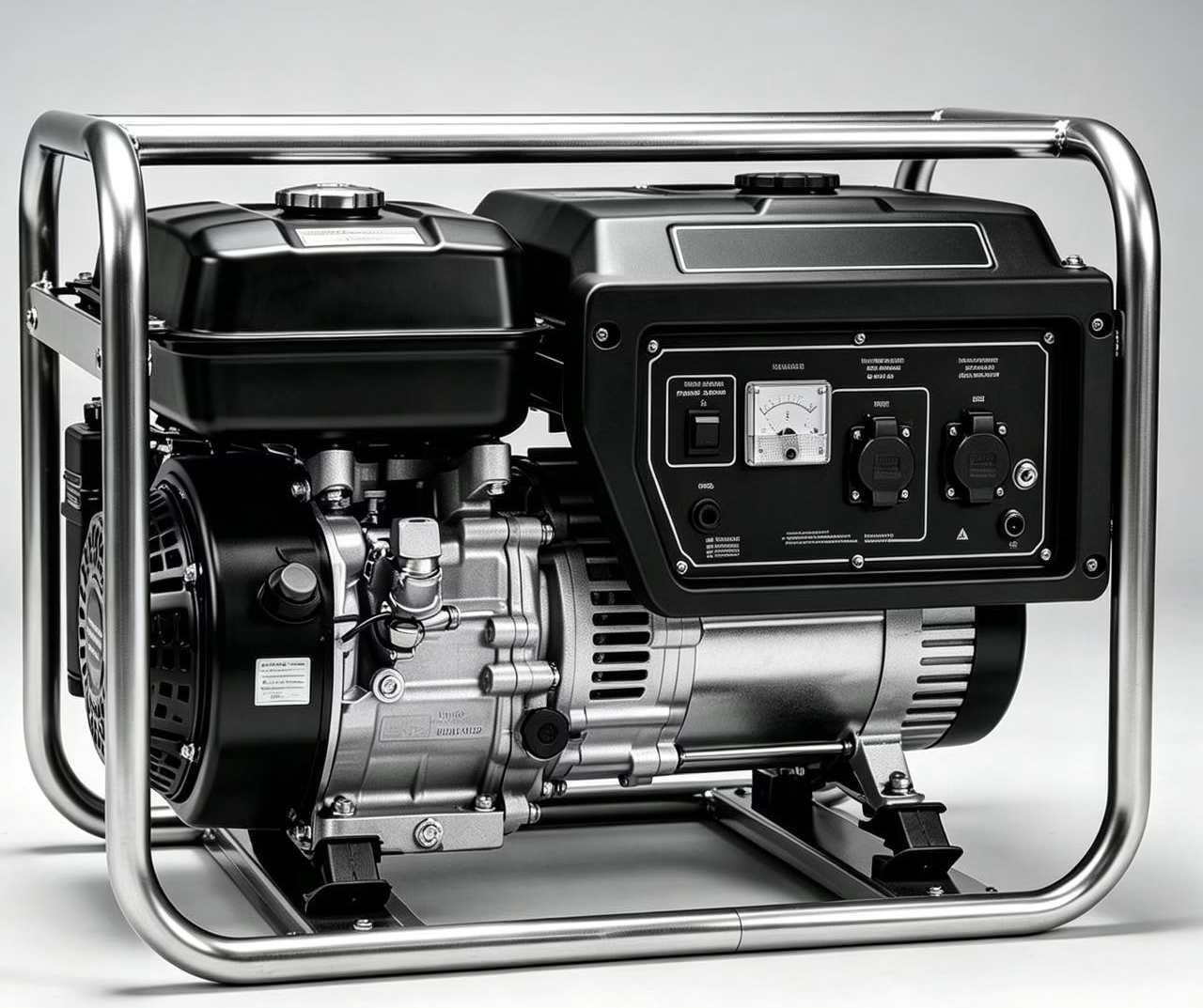
For many small business owners, buying a generator looks straightforward at first. They simply ask: “How many kilowatts do I need?”
But after years in export business, I’ve seen many buyers choose the wrong machine — either too small, too expensive, or completely unsuitable for their actual working environment.
When selecting a generator for small business, the most important thing is not buying the biggest model. It is choosing a generator that matches real operating conditions, fuel budget, and long-term usage.
If you are trying to choose generator equipment for a shop, workshop, farm, construction team, or small commercial project, these are the points that matter most in real business.
1. Start With Power Calculation — But Keep It Practical
The first mistake many buyers make is calculating only “running power” and ignoring startup load.
Some machines, especially:
- water pumps
- air compressors
- refrigerators
- welding equipment
- motors
need much higher power during startup.
A generator that technically “matches” running wattage may still fail when equipment starts simultaneously.
Simple Power Estimation Method
A practical method many traders use:
Step 1:
List all equipment that may run at the same time.
Example:
- Lights
- Fans
- Freezer
- Water pump
- Computer
- Small machinery
Step 2:
Add total running wattage.
Step 3:
Add 20–30% safety margin.
This extra margin matters more than many first-time buyers realize.
Real Export Experience
In African and Middle Eastern markets, some buyers initially choose smaller generators to reduce purchase cost. But after several months, overload problems appear because real usage becomes heavier than planned.
Usually, slightly larger capacity gives:
- better stability
- lower stress on engine
- longer service life
2. Choose Based on Usage Scenario, Not Only Power
The same generator may perform well in one business but poorly in another.
For Small Shops or Offices
Main focus:
- low fuel consumption
- stable voltage
- quieter operation
These users usually prefer compact gasoline generators.
For Farms or Construction Sites
Main focus:
- durability
- long running hours
- easier maintenance
Diesel generators often become more practical here because fuel efficiency matters during continuous operation.
For Mobile Business Use
Some users need generators for:
- outdoor events
- mobile repair service
- food business
- market stalls
Weight and portability become very important.
A heavy generator may look powerful on paper but become inconvenient in daily work.
3. Fuel Type Matters More Than Many Buyers Expect
When people try to choose generator models, they often compare only price and power output.
But operating cost later becomes very important.
Gasoline Generator
Advantages:
- lower purchase cost
- easier startup
- quieter
- suitable for lighter use
Best for:
- backup power
- short daily usage
- small commercial use
Diesel Generator
Advantages:
- better fuel economy
- stronger for long-hour operation
- longer lifespan under heavy load
Best for:
- workshops
- farms
- commercial projects
- frequent power outage areas
In many developing markets, diesel units become more economical over time despite higher initial cost.
4. Common Mistakes Buyers Make
Choosing Only by Cheapest Price
Very cheap generators sometimes create bigger problems later:
- unstable voltage
- difficult spare parts supply
- high fuel consumption
- shorter engine life
For business users, downtime usually costs more than the initial savings.
Ignoring Local Repair Conditions
In export business, this is a very real issue.
A generator may look technically excellent, but if local mechanics cannot easily repair it or find spare parts, customers become frustrated quickly.
Experienced importers usually prefer models with:
- common engine structures
- easier maintenance
- available spare parts
Buying Oversized Machines Unnecessarily
Some buyers think:
“Bigger is always safer.”
Not always.
Oversized generators running at very low load for long periods may:
- waste fuel
- increase maintenance cost
- reduce efficiency
The goal is balance, not maximum size.
5. Spare Parts and After-Sales Support Matter
A generator business is not only about selling machines. Repeat orders often depend on after-sales experience.
Before placing bulk orders, experienced buyers usually ask suppliers:
- spare parts availability
- maintenance support
- engine compatibility
- warranty policy
- recommended service intervals
A reliable supplier should answer these clearly.
Final Thoughts
Choosing the right generator for small business is really about understanding actual working conditions.
The best generator is not necessarily:
- the cheapest
- the biggest
- or the most powerful on paper
It is the one that:
- matches real power demand
- fits fuel budget
- survives local conditions
- can be repaired easily
- operates reliably for years
In real export business, buyers who take time to properly choose generator specifications usually have fewer warranty issues, better customer satisfaction, and stronger long-term sales.